
I never liked you Joan Didion. In life I doubt we would be friends. Your spindly fingers that held one too many cigarettes, your squinty eyes cynical and incisive. You would not have approved of me – whatever my accomplishments or gains that would have lead me through your door and into your living room. No, you would have thought me lacking, naïve, possibly a hack but certainly not a writer. And to the extent that I would have nothing to offer you that you did not already have — in spades – you would have tolerated me for 15 minutes, maybe 20, and then politely absented yourself. But 15 minutes would have been your gift to me, since I could not give one to you. And I would keep it close, like a picture of a parent or child inside my wallet. No, I never liked you because of that imagined coldness. But I drank you in big gulps, sweet aromas in my coffee.
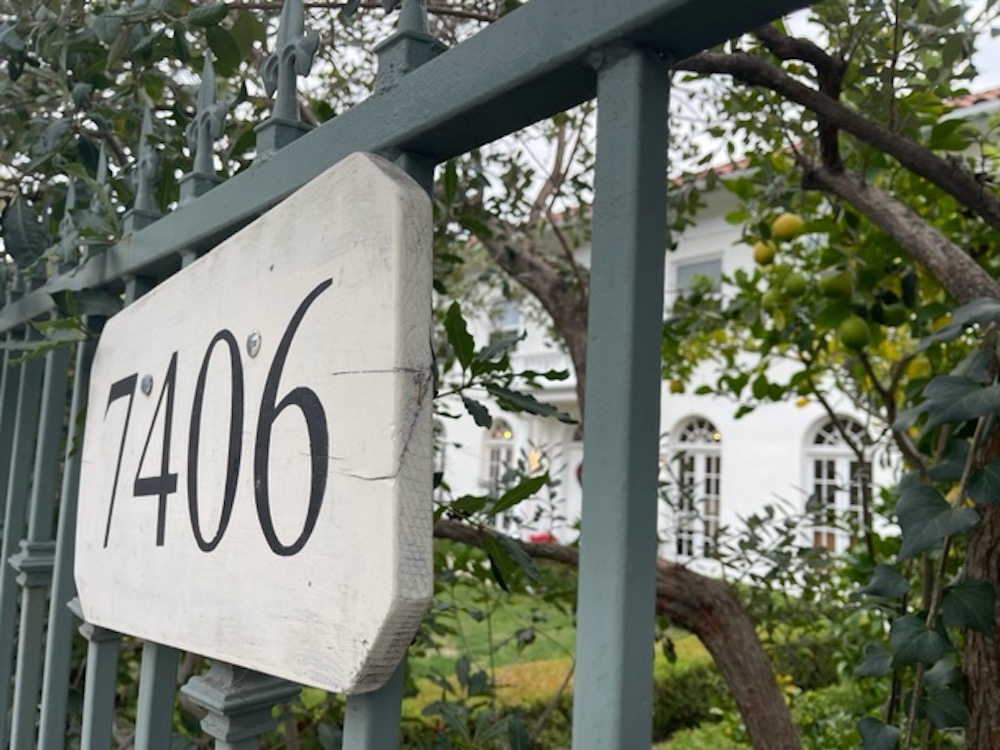
You did not call to me, except from afar in your essays of the ‘60s and ‘70s that peeled away our faces in layers until we bled. The new journalism, it was called, and I jumped in head first. We were neighbors, in a way. Your stately white manse on Franklin Street in Hollywood is and was but a two mile walk from my home in Los Angeles and I pass it now every day on my way to an overcrowded hiking trail called Runyan Canyon. I inch up the hills of broken earthquake-ravaged sidewalks, making wide circles to avoid smoking dog-walkers or clueless millennials, and rant at cars making left turns on Hollywood boulevard almost right into me. The hard branches of manicured lemon tree hedges scratch my arm, but I see you, Joan, in that house on Franklin Street, standing in the doorway to welcome the unending groups of film people, writers and hangers-on who populated your salons in those intoxicating days you shared with John Gregory Dunne and your energetic daughter Quintana. Your careers roared at warp speed through the film studios just blocks away.
You were just finding your voice in such seminal works as Play It as It Lays about a deadened California landscape so unctuous in your word choices and descriptions it made me want to take a shower. But I see no need to list your tomes or what made them resonant or miss the mark. You could have been writing about social media or skateboarding and it would have been searing in its truths told from the moment, fiery at the edges from your bad mood and a base line from which those future interpreters of our time would draw. But it was not until your husband died, and then your beloved daughter, that I felt you had softened. In your year of magical thinking you let down your guard, dwelled in your vulnerability and realized that maybe your luck had run out. At that moment you became human to me and, maybe just maybe, we could have been friends. I have since had my losses and you were there to catch me in words of indescribable pain, from which you rose and then welcomed peace for the remaining years you had. I could have been your friend then as you alighted out of the accolades and lived in the true darkness from which we all run. You lived in it for better or worse. It was all that was left you and you embraced it. And now you are no doubt embracing the next phase, your death, which has come at much relief to you and perhaps not soon enough.
And I walk by your house as it whispers to me on this day before your death. It tells me of the chirpy breakfasts with your family followed by fallow days staring out your office window above the Hollywood flats and the specter beyond of the Park La Brea towers. And I draw from it, my muse house. I wade into the essay form that brought you so much momentum in your young days before you wrote films and novels. Such indulgence was not natural for me. I, who have written na’ry a first person pronoun for most of my 40-year career reporting about everything from film and food to starvation and genocide, I who make a living touting the top reasons to visit such places as Johannesburg and Los Cabos cannot put pen to paper about the natural disasters and political catastrophes that shaped my ever more embittered world view in this second decade of the 21st century.
Your house is white and bright. It is Christmas and someone has put a wreath on the door. There are cars behind the wrought gate, as the house is now a business location, a non-profit that has turned bedrooms into offices and the dining room into a conference table. And, in fact, with further research, I find it is exactly that – a house purchased at great cost by something called the Shumei America foundation. I have met their acolytes in the canyon – providing a chair to sit on while they stare, sitting across in their own folded metal chair, and pretend to be curing all my ailments. Then they give me a pamphlet asking me to join or give money and off I go, possibly healed of all mankind’s woes. A “spiritual organization dedicated to advancing heath, happiness, and harmony for all humankind,” says the folded paper, with some added words in Katakana.
What would you think, Joan? What would you have written about them in the context of yet another religious con in the world to tempt an all-too-willing American public with promises of well-being as the money pours in through that welcoming wreathed door.
But, it is the day before your death and you long-ago moved on. I have not. I am using this year of thinking magically and breathing dangerously to find my voice, cynical and strained as it may be, to tell my tale and in it tell the tales of others and the states in which they lived and died. My ex-husband, for instance, who was not a screenwriter like yours, or even a brick layer. He was a pirate plying the coasts of the Indian Ocean for plunder in the form of ransom. Or at least that is what he became. My works were rarely converted into books beyond those of guide books or an essay here and there recounting the trials of some lost and forgotten tribe in Africa. My daughter or son was sacrificed to the mad gods of the written word, never to be born for the stress of trying to live life as a writer. But my dreams remain alive and vivid and dance to the thought of you, my muse once again, in death as in life. But maybe now we can be friends.